Contact shop for offers.
Curtain & Upholstery Cleaning

Regular, thorough upholstery and curtain cleaning can freshen and restore your fabrics and add to the life of your curtains, sofa, armchair and other soft furnishings.
Upholstery
With over 25 years experience Village Dry Cleaners can clean all your fabric, sofa, armchairs, chairs and cushion covers to the highest standard possible.
Curtains
Most curtain fabrics can be dry cleaned and it is advisable to do this on a regular basis. Should you leave your curtains for a number of years the dust, dirt and grime that builds up can seriously impact the end result of any cleaning undertaken and can also take away from the life of the curtain.
Couture & Vintage

We at Village Dry Cleaners specialize in all types of designer items such as Prada, Gucci, Channel, Versace D&G etc. We pride ourselves in giving bespoke treatment to all your couture and vintage items.
Village Dry Cleaners individually assess and treat every item depending on their colour, type of material, age of stain and style. We hand finish each item to the clients requirements. All packaging can also be to the clients specific requests too, from hanging them on wooden or metal hangers to having them individually folded with acid free tissue paper.
Please look at our silk and stain sections for more information.
Shirts
Excellent Shirt Service
We offer exquisitely laundered, hand finished shirts which can be put on hangers or folded.
The shirts are initially pre-treated for stains and then undergo a collar-n-cuff scrub to make sure that all the grease and grime areas are properly prepared before the washing cycle.
The shirts then undergo a full washing cycle using quality soaps and conditioners, ensuring a deep and thorough wash.
After the drying process, every shirt is pressed by hand and is either presented on a hanger or is folded into a convenient sized shirt bag.
All missing collar bones are replaced after the cleaning process.
Our aim is to provide a professional and personal service with which you will be 100% satisfied.
Please contact us for more information.

We have been cleaning mens suits for over 30 years and our team of expert
cleaners and finishers have developed and perfected a process to ensure that
we always obtain the best possible results;
Firstly, all items are checked for stains and are pre-treated before being
cleaned according to the manufacturer’s cleaning label.
Once the suit has been cleaned it is then re-checked for any stubborn stains
and, if necessary, is then re-cleaned to ensure the best possible results.
Once fully clean, the suit is passed on to our team of finishers for steaming and
pressing as required.
Having been pressed the suit will be inspected again to ensure nothing has
been missed and any lint or bobbles on the material have been removed.
The suits are then placed on hangers and in our biodegradable covers. You may
choose to use our wooden special suits and coats etc.
We can clean ANY kind of suit from bespoke tailor made suits to high street
ready to wear suits.
If you are unable to come in to see us we can offer a pick up and delivery
courier service from anywhere in the UK. Please contact us for further
information.
We offer exquisitely laundered, hand finished shirts which can be put on hangers or folded.
The shirts are initially pre-treated for stains and then undergo a collar-n-cuff scrub to make sure that all the grease and grime areas are properly prepared before the washing cycle.
The shirts then undergo a full washing cycle using quality soaps and conditioners, ensuring a deep and thorough wash.
After the drying process, every shirt is pressed by hand and is either presented on a hanger or is folded into a convenient sized shirt bag.
All missing collar bones are replaced after the cleaning process.
Our aim is to provide a professional and personal service with which you will be 100% satisfied.
Please contact us for more information.
Ironing Service.

Tired of standing at home ironing shirts, bedding etc. when you could be relaxing after a hard day work. We at the Village Dry Cleaners will help you enjoy your evenings and weekends with our expert hand finishing iron service. Contact us for any quotes.
About

Village Dry Cleaners, established 1982, is a family run business based in Chorlton-cum-Hardy; within easy reach of Manchester and the surrounding townships.
Our staff, at Village Dry Cleaners, are trained to the highest standards in their area of expertise to properly identify, clean and/or finish all garments, and to exercise a number of special procedures when handling your items.
For every day, designer and evening wear, we are able to offer a service that is second to none. We inspect every garment prior to dry cleaning and try to remove both general staining as well as more complicated grimes and stains.
With over 30 years of experience and with our stage wear experience there are very few fabrics or trimmings we are unable to deal with.
We regard ourselves as the best dry cleaners in the area, capable of providing you with high quality sevices, returning your garments to you fresh and as near to new as possible from our state of the art, environmentally friendly, dry cleaning process.
Our aim is to provide a professional and personal service with which you will be 100% satisfied.
We offer Same Day Cleaning every day
Silks

What are “silks”?
Silk are just one of many textiles ranging from polyester to animal hair fibres, that can be used to produce delicate sheer fabrics. The latest development in the field of lightweight delicate fabrics is the introduction of synthetic microfibres. Microfibres are often mistaken for pure silk but they are usually more robust. Pure silk presents the major problem in terms of storage, washing and drycleaning.
Looking after your silks.
- The longer a stain remains the more difficult it is to remove.With water based stains you may pad off as much of the stain as possible using white kitchen roll or tissue, seal the garment in a polythene bag and bring to the Village dry cleaners as soon as possible. Never rub stains.Silk is very sensitive to abrasion and may sustain serious damage even with a very light rub.When treated promptly oil based stains can be easily removed by dry cleaning.However , oils can absorb some dyes resulting in faded patches when the oils are removed.
- Some dyes on silk may be affected by alcohol.We recommend perfumes and toiletries containing alcohol should be allowed to dry before you dress. Other dyes, especially the blues and greens, may be sensitive to alkalis. Most soaps, shampoos, detergents and even toothpaste are sufficiently alkaline to cause colour loss.
- Many bright colours, particularly on silk, cotton, rayon and wool, can fade from exposure to sunlight or artificial light. Some blue and green dyes can fade very quickly particularly on silk.We recommend storing garments away from light.
- Perspiration turns alkaline on exposure to air and may damage both dyestuff and fabric. Silk is likely to suffer chemical damage over a period of time, to the extent that it often ruptures or even disintegrates in underarm areas during drycleaning or washing. Underarm shields are recommended if you perspire heavily.
- A cornmon problem on delicate/sheer fabrics is the tendency of the finish to discolour upon contact with moisture. In some cases, just wearing the article in the rain can cause considerable shading. The moisture effects of water-soluble food and beverage spillage as well as perspiration may also cause discolouration. If the article is badly stained by moisture, and labelled as drycleanable, it may be very difficult to correct this shading properly,it may even be necessary to wet clean.This would usually require the customer’s consent.
- There are many washable silks now on the market.If garments are labelled as washable, we assume that the manufacturer has tested the fabric accordingly. However, this is not always the case.Some dyes on washable garments may bleed during a washing procedure suggested by the care label. Most pastel colours have a greater degree of colour fastness. It is not advisable to wash dark coloured garments with other items . If the article is multicoloured, a colour fastness test should be done before washing the garment.We do not advise having articles of this type drycleaned unless the garment also carries an appropriate drycleaning care label symbol. When customers bring these garments here for processing,we must process the articles according to the care label otherwise, there is no redress from the retailer.
Wedding Dress Cleaning

Wedding dresses are what we do best because we understand just how precious a wedding dress is. We have many years of experience, knowledge and expertise, and thousands of happy customers who have used this service and wouldn’t recommend anyone else!
Our in-house wedding dress expert assesses each wedding dress on an individual basis and is able to give you a full report on the expected outcome of cleaning before the cleaning process is even started.
We can clean ANY dress from vintage dresses dating back to the 1900s to high end designer brands and hand-made bespoke designs created especially for your big day.
Over the last 30 years we have developed a close working relationship with many of the best Bridal boutiques in the Greater Manchester area and also with many wedding dress designers. We have built up a really in-depth knowledge about wedding dresses. We understand how they are designed, how they are constructed, the types of fabrics and adornments which are used and the techniques involved in cleaning and preserving them.
No honest cleaner will give you a 100% guarantee to remove all stains as lot depends on the type and age of the stain as well as the type of material but we are 100% confident that if we can’t clean it then nobody can!
Our cleaning process explained…
First of all each wedding dress is carefully inspected on arrival. Each stain is treated by hand in order to remove as much as possible before the cleaning process. The dress is then placed in a protective bag and cleaned on a very delicate cycle. We have every type of cleaning solvent at our disposal to treat any type of dress in any type of material and, more importantly, we have the knowledge in order to use them safely and effectively.
After this initial cycle we then closely inspect the dress to locate any stubborn stains and repeat the whole process again until we have achieved the best possible results without risking any damage to the delicate fabric of the dress.
Once we are completely satisfied with the cleaning then one of team of hand finishers will steam the dress. This is a lengthy process, particularly with multi-layered dresses, as the delicate fabrics require meticulous attention to detail.
Once fully steamed and allowed to dry, the dress will undergo one more inspection before
being covered ready for you to collect.
If you are unable to come in to see us we can offer a courier service which can pick up from any location in the UK, please contact us for details.
SPECIAL OFFER
Have all your wedding day accessories cleaned at a 50% discount if you send them in with your wedding dress (offer includes veils, underskirts, shoes, boleros – please enquire for further details).
Have all other Bridal party clothes cleaned at a 20% discount if you send them in with your wedding dress (offer includes Bridesmaids, flower girls, Groom’s suits, ushers, mother of the Bride & Groom – please enquire for further details)
SELLING YOUR DRESS?
Please ask us for the best advice on selling your wedding dress, we can get it in the best possible condition for re-sale and offer recommendations for where best to sell.
Please contact us to arrange a convenient time to bring in your dress and speak with our advisor.
Stains
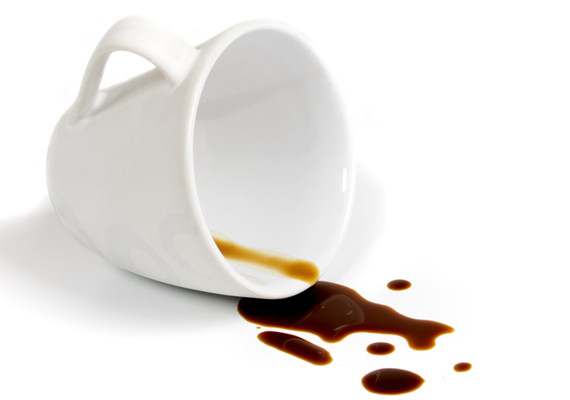
WHAT CAN WE DO?
A stain on a garment can be a serious problem and it is one of the main reasons that clothes are brought to Village Dry Cleaners. Here we can attempt to remove stains using stain removal procedures that we consider to be safe. However, not all stains can be removed without damaging the garment.
The stains may be too set in to the fabric,
Fabric of a delicate nature can limit the degree of removal.
The dye in the fabric may be soluble,we may end up removing the dyestuff as well as the stain.
Because of the many unknown factors relating to staining, fabrics and dyes, we cannot always guarantee stain removal without damage. Some spots will not come out, despite our best efforts. However, the more information we are given, the greater the chance of a satisfactory result.
FOOD AND DRINK STAINS
Most stains occur from spillage of food and beverages. The wearer will often sponge the affected area in an effort to remove the spillage, when the area dries there is no noticeable stain.
Later on, with exposure to heat or with the passage of time, a yellow or brownish stain may appear. This is usually caused by the oxidation of sugar. You have probably seen this happen very quickly when you have eaten an apple and watched the core portion turn brown after exposure to the air. Most beverages, from lemonade to beer, contain sugar.
Another type of oxidation stain occurs when an oily substance, such as a cooking or vegetable oil, is exposed to heat, or ages in a garment for an extended time. Treated early, such substances are easily removed by the cleaning process. However, once they become yellow or brown they become much more difficult to remove.
Albumin, found in natural food such as meat, eggs, milk or fish can make stains difficult to remove. Coffee and tea contain tannin, which can also produce stubborn stains. Again, these marks may disappear after the area is sponged but removal is often incomplete and the stain may reappear at a later date. Tomatoes also contain tannin, which is why spaghetti sauce causes such problems.
Other stains can be caused by food colourings or natural dyes . Wines can cause blue, purple, red, brown or even black stains. Curries and mustard contain turmeric, which also causes a stubborn stain.
INK AND PAINT STAINS
After food and drink, ink and paint stains are probably the most common. Some ink stains are permanent and are impossible to remove; others can be removed, as can many stains from paint, nail polish, and cosmetics. However, heavily built up and dried paint is often impossible to remove. In every case, successful stain removal depends a great deal on the type of fabric and the colour fastness of the dye.
PERSPIRATION STAINS
Perspiration also causes stains and this is a particular problem on silk garments. Perspiration left in a silk garment can damage the textile and weaken it so that it tears easily. Repeated exposure of a garment to perspiration and body oils can develop into a permanent yellow discoloration. In addition, perspiration can react with the dye in the fabric, which makes it more difficult to remove the stain.
HOW CAN YOU HELP?
- Bring in a stained garment as soon as possible, preferably within days, to prevent the stain from setting.
- Avoid the use of home bleaches. Failure to rinse out the bleach or incorrect use could permanently damage the fabric or dyestuff.
- Never rub a stain. This is particularly im important when dealing with delicate fabrics. Blot the stained area gently with a white paper towel to absorb the stain. This will help remove the staining substance without spreading the stain and will avoid damaging the fabric.
- Inform us of any attempts to remove stains, even if they are no longer visible.
- If you do attempt to remove a stain yourself, be aware of the consequences. Some home remedies can be harmful.If you damage the garment, we may not be able to help you.
Colour
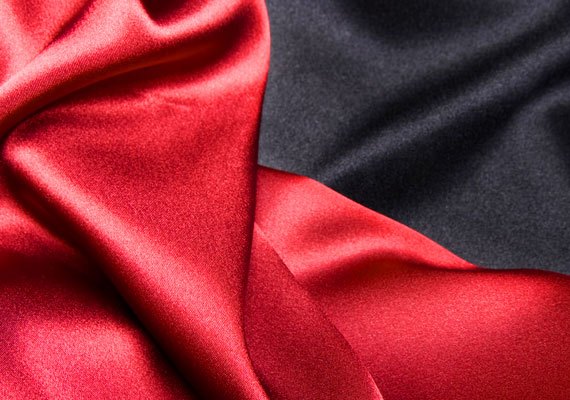
Here are many ways of colouring fabrics;
some are woven from dyed yarns, some are dyed after weaving; and some are coloured by printing the surface. In spite of modern technology colour failures continue to occur.
The problem is that some dyes are soluble in drycleaning solvent. A blend of two or more dyes in a garment where only one is solvent soluble, can result in major colour change, e.g. a purple garment coloured from a blend of red and blue dyes will end up either red or blue if one dye is soluble and is removed.
Colour failure occurs frequently in household items such as bedspreads and curtains. Often the fading is only slight, but it becomes noticeable when, one item is compared with a matching item which has not been cleaned or cleaned in the same manner. Matching curtains and pelmets should all be cleaned together, and in the same process, if possible.
Other reasons for colour loss are water solubility , crocking, light exposure, fume effects and chemical damage.
Some dyes bleed when wet and this can occur in washing , exposure to perspiration, rain, or accidental water spillage.
The fabric finish in some garments, particularly viscose and acetate, have often been treated to give them body. Accidental water spills can cause the additional fabric finish to form dark rings or streaks as it dries. Such treated garments may lighten on exposure to water. This is difficult to remedy on drycleanable fabrics because they require additional water to remove the build-up, and this may aggravate the problem.
Crocking is where the colour rubs off from the surface of the fabric. It is usually caused by wear, particularly along the edges of hems and creases.
Light exposure causes most dyes to fade, especially sunlight, but sometimes colour failure occurs rapidly on exposed areas such as shoulders, collars, and sleeves. Artificial light can also cause fading. Blue, green and lavender dyes are particularly light sensitive, especially on silk and wool fabrics.
Fumes from gas fires and car exhausts for example may cause a gradual colour change. Such change is usually more noticeable on exposed areas such as shoulders and sleeves, or in the case of curtains and upholstery on the external folds. Fumes can affect even garments which have been stored away unless the container was airtight.
Chemical change to dyes, may be caused by bleaches , perspiration or alkaline substances present in many toiletries, particularly perfumes. Dyes used on silk can fade after contact with alcohol and the acid from lemon juice and soft drinks can cause a bleaching effect on some dyes.
White is actually a colour, too.
In their natural state, many fabrics have an off-white or yellowish cast and are often bleached to remove this,or treated with whiteners, in order to make them appear whiter and brighter. Some break down and lose their whitening power.They are especially sensitive to light exposure when wet and problems can often occur if a garment is dried in the sun. For example, a white sweater dried flat in the sun may turn yellow on the front yet remain white on the back.